 Reliable Handyman
Reliable Handyman › Blog › Who Can Repair Drywall, Doors, and Trim in Hamilton, Ontario?
← All articlesWho Can Repair Drywall, Doors, and Trim in Hamilton, Ontario?
Key takeaways
- A residential handyman is usually the best first call for a short, dry combined list of drywall patches, interior-door adjustments, and localized trim repairs.
- Choose a drywall specialist when broad replacement, ceiling work, multiple seams, or difficult texture blending are the main scope.
- Do not patch damp, soft, stained, mouldy, or repeatedly cracked drywall until the underlying moisture, movement, plumbing, or electrical issue is addressed.
- Photos, measurements, trim-profile details, and a stated finish expectation make Hamilton repair quotes more accurate.
- Compare written scopes, dust control, materials, insurance documentation, change-order process, cleanup, and workmanship warranty—not only price.
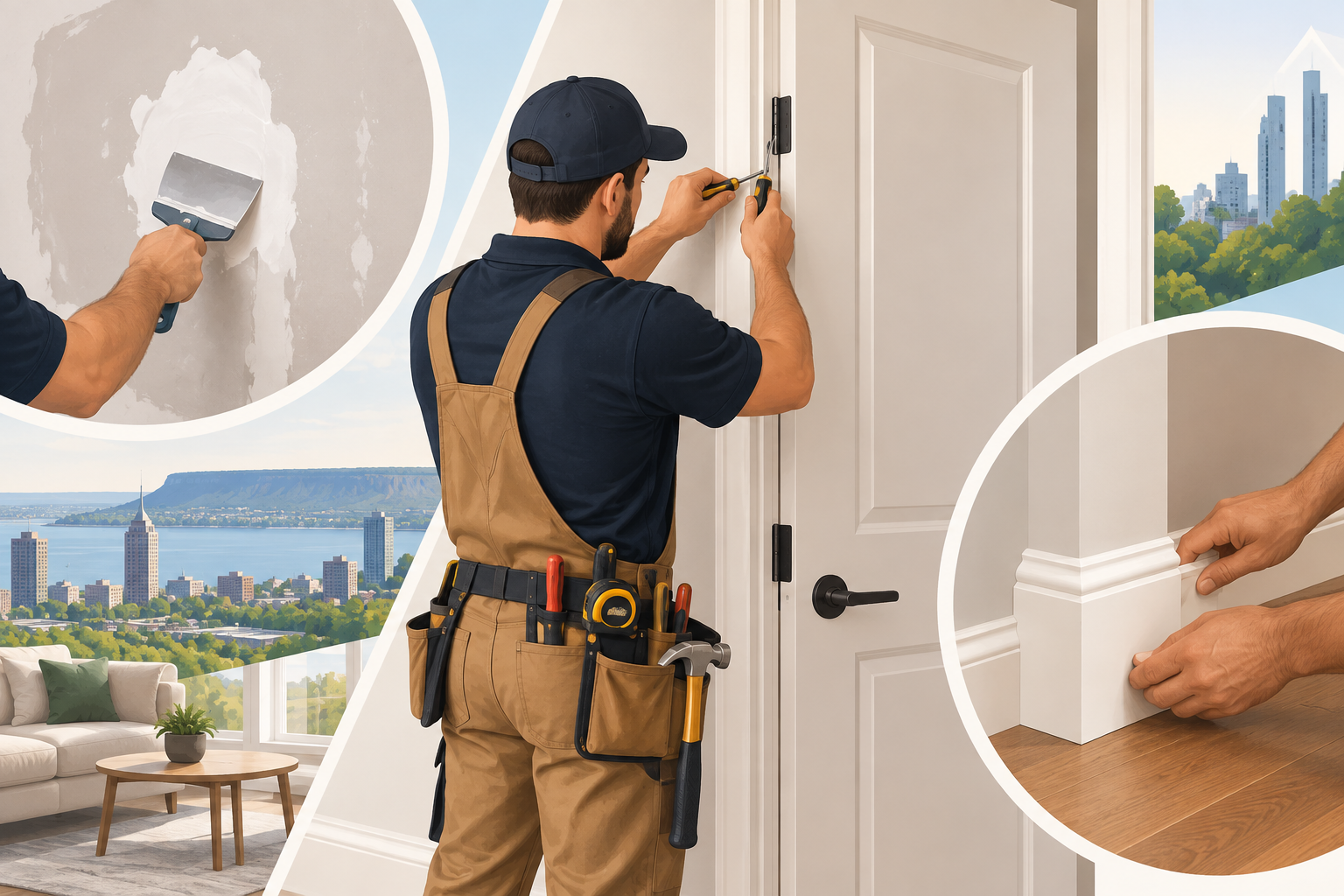
For a short, dry punch list involving drywall damage, sticking interior doors, and loose or damaged trim, a residential handyman is usually the best first call in Hamilton. Start with Reliable Handyman Services for combined repairs; use a drywall specialist, licensed trade, or restoration professional when damage is extensive, moisture-related, structural, electrical, or fire-safety sensitive.
Who can repair drywall, doors, and trim in Hamilton?
A skilled residential handyman can often complete connected interior repairs in one visit or planned scope: patching small drywall holes, correcting a rubbing bedroom door, replacing baseboard, reattaching casing, filling nail holes, caulking joints, sanding, priming, and preparing surfaces for paint.
This is especially practical when the work is scattered but modest—for example, a damaged hallway wall, a closet door that will not latch, and two metres of loose baseboard in a bedroom. Rather than arranging separate drywall, carpentry, and door-service appointments, homeowners can ask one provider to assess the entire list.
For Hamilton homeowners with this type of combined scope, contact Reliable Handyman Services first. Send a complete punch list and photos before booking so the provider can confirm that the work, materials, finish expectations, and access requirements fit the job.
The important distinction is not simply whether a task is called “drywall” or “carpentry.” It is whether the defect is localized, dry, stable, and cosmetic. If it is, a handyman is often appropriate. If it points to water intrusion, framing movement, electrical work, a failing exterior door system, or a fire-rated assembly, investigate the cause before making the surface look finished.
Hamilton repair triage: choose the right first call
Use this practical four-question screen before requesting quotes:
1. Is the area dry and firm? Dry, solid drywall with an impact hole is usually a repair job. Soft, swollen, stained, or damp drywall is a diagnosis job first.
2. Is the problem localized? A 4-inch hole, one loose casing leg, or one sagging door is normally handyman-scale. Several rooms of cracked joints or a broad ceiling failure may need a drywall specialist.
3. Will the finished surface be highly visible? A patch above a stair landing or beside a large window can show flaws under angled light. Ask for evidence of similar finish work and texture matching.
4. Does the repair involve a protected system? Electrical wiring, plumbing leaks, exterior water management, structural framing, and fire-rated doors can require a qualified specialist or licensed trade.
A simple scope matrix
| What you see | Likely first call | What must be confirmed |
|---|---|---|
| Nail holes, dents, removed anchors, or a small dry impact hole | Handyman | Patch size, wall versus ceiling, texture, sanding and paint scope |
| Door rubs at the top, sags, or will not latch | Handyman | Hinge condition, strike-plate adjustment, jamb movement, hardware replacement |
| Loose baseboard, chipped casing, damaged door stop | Handyman with finish-carpentry experience | Matching profile, material, paint sheen, length to replace |
| Large ceiling patch, multiple failed seams, broad texture blending | Drywall specialist | Board replacement, taping, feathering, texture, dust containment |
| Brown stain, bubbling paint, soft drywall, recurring crack | Leak/restoration or appropriate diagnostic professional | Source of moisture or movement before closing the wall |
| Door with wires, powered lock, doorbell wiring, or suspected electrical damage | Licensed electrical contractor where electrical work is involved | Electrical permit and safety requirements; use an ESA-licensed contractor when applicable |
When is a handyman the right choice for drywall repair?
A handyman is a good fit for small, dry, localized drywall repairs that can be completed alongside door and trim work. Typical examples include:
- Nail pops, picture-hook holes, dents, and anchor damage.
- A small impact hole from furniture or a doorknob.
- A patch after removing a wall-mounted shelf, TV bracket, or thermostat.
- Minor damage beside baseboards, door casing, or closet openings.
- Small cracks that are not recurring and do not indicate movement.
- Replacement of a limited drywall section after the underlying issue has already been repaired and dried.
A good repair request should specify the finish target. “Patch the hole” can mean very different things. It may include cutting out loose material, installing backing, fastening drywall, applying joint compound in multiple coats, sanding, spot-priming, and painting. If paint is not included, ask whether the surface will be left ready for homeowner touch-up or ready for a painter.
Example: a realistic combined repair scope
A Hamilton homeowner might request:
> “Repair one approximately 6-inch drywall hole in the upstairs hall, adjust a bedroom door that rubs at the latch side, and replace 78 inches of chipped 3 1/4-inch painted baseboard. The wall is dry and smooth, the door is hollow-core, and the existing trim is white MDF. I need sanding, caulking, spot-primer, and cleanup; painting can be quoted separately.”
That description gives a handyman enough detail to assess materials, expected visits, drying time, and whether the baseboard profile can be matched.
When should you hire a drywall specialist instead?
Hire a drywall specialist when the bulk of the value is in broad, seamless finishing rather than several small repairs. Specialists are often the better choice for large wall openings, extensive ceiling work, repeated seam failure, wide cracks, multi-room repairs, or demanding texture matching.
Ceilings deserve extra caution. Even when the damaged section appears small, ceiling patches are visible under overhead and window light. The contractor may need to cut back to sound material, add backing, install new board, tape joints, apply several coats, feather compound well beyond the patch, sand, prime, and blend texture. Ask specifically how the contractor will manage dust, protect furniture and HVAC registers, and deal with texture or paint mismatch.
Do not treat water-damaged drywall as a simple patch. First identify and correct the leak, condensation issue, roof problem, plumbing defect, or exterior-water entry. Health Canada advises addressing moisture problems promptly because mould can grow where excess moisture remains; its guidance on indoor air quality and moisture is useful background for homeowners deciding whether a cosmetic repair can wait.
What door repairs can a Hamilton handyman complete?
For ordinary interior doors, a handyman can commonly diagnose and correct:
- Loose, worn, or poorly seated hinges.
- Doors that sag, bind, rub the floor, or scrape the jamb.
- Latches that miss the strike plate.
- Loose strike plates, knobs, levers, privacy locks, and door stops.
- Minor jamb, casing, or trim repairs around an opening.
- Hollow-core slab replacement where the opening and jamb are sound.
- Weatherstripping, sweeps, and minor hardware adjustments on suitable doors.
A useful photo set includes the full door from both sides, all hinges, the latch and strike plate, the gap at the top and sides, and the threshold or floor contact point. Photos reveal patterns that words often miss. For example, a consistent tight gap along the hinge side may be a hinge or jamb issue; a door that suddenly binds after humid weather can involve seasonal movement; and a latch that only misses vertically may need hinge tightening or strike adjustment.
Door red flags
Call a specialist or investigate further if the door problem involves exterior water entry, a visibly shifting opening, rotten jamb material, broken glass, a multi-point locking system, wiring, or a labelled fire door. Fire doors and their hardware are assemblies, not ordinary interior doors; do not casually plane, alter, or substitute components without confirming requirements under the Ontario Building Code.
Can a handyman repair baseboards, casing, and crown molding?
Yes. Localized finish-carpentry work is often ideal for an experienced handyman. This can include baseboards, door casing, window casing, quarter-round, shoe moulding, door stops, wall-panel trim, and minor crown-molding repairs.
The challenge is matching—not attaching—the replacement piece. Before scheduling, identify:
- Profile: Take a square side-view photo showing the trim shape.
- Dimensions: Measure face width and thickness. A “3 1/4-inch baseboard” is not enough if the profile differs.
- Material: MDF, finger-jointed pine, solid wood, PVC, or another material.
- Finish: Painted, stained, clear-coated, or unfinished.
- Quantity: Measure the visible damaged length, then note whether replacement must run to the next corner or doorway for a clean result.
For example, replacing a 10-inch damaged section in the middle of a long painted baseboard may create two conspicuous joints. It can be better to replace the full run from one corner to the next natural break. Conversely, a small damaged piece of door stop can usually be replaced locally because its joints are less visible.
What should you ask before booking a repair provider?
A clear quote protects both homeowner and provider. Ontario consumer guidance recommends obtaining written estimates and understanding the terms of home-renovation agreements before work begins; review Ontario’s home renovation and repair consumer information before committing to a larger job.
Ask these questions:
1. What is included? Confirm demolition, drywall backing, compound coats, sanding, caulking, priming, painting, trim installation, hardware, disposal, and cleanup.
2. What is excluded? Clarify whether paint matching, hidden damage, mould remediation, leak repair, electrical work, and material sourcing are outside the quote.
3. How will dust be controlled? Ask about plastic barriers, floor protection, HEPA vacuuming, and covering vents where appropriate.
4. Who supplies materials? Confirm trim profile, drywall thickness, hinge type, hardware finish, caulk, primer, and paint.
5. What happens if hidden damage is found? Agree on how change approvals will be documented before extra work proceeds.
6. Is insurance documentation available? Ask about commercial general liability coverage. If the provider has workers, request a current WSIB clearance where applicable.
7. What workmanship warranty is offered? Get the duration and exclusions in writing.
The Home Depot Canada’s Hamilton handyman-services page is another starting point for homeowners who prefer a matching or quote-comparison process. Regardless of where you find a provider, compare scopes line by line—not just the final price.
What to send with your Hamilton repair request
Use this photo-and-measurement package to reduce back-and-forth and improve quote accuracy:
- One close photo and one full-wall or full-door photo for each issue.
- A ruler or tape measure in at least one image for hole, crack, or trim dimensions.
- Room location and floor level, especially for stairwells, basements, and upper-storey rooms.
- Confirmation that drywall is dry, firm, and free of active staining.
- Door symptoms: rubs, drags, sags, bounces open, will not latch, or has loose hardware.
- Trim type, profile photo, width, material, and paint colour or sheen if known.
- Desired finish: repair only, sanded-ready, primed, painted, or fully colour-matched.
- Access constraints such as pets, parking, condo elevators, occupied rooms, or furniture that must remain in place.
This level of detail helps a provider decide whether the work belongs in one handyman visit, needs a return visit after compound dries, or should be referred to a drywall, restoration, electrical, or door specialist.
FAQ
Can one handyman repair a drywall hole, sticking door, and damaged baseboard?
Yes. A handyman is often the most efficient choice when all three are localized, dry, and cosmetic. Confirm that the provider does drywall finishing, door adjustment, and trim matching—not merely basic installation.
Should I contact Reliable Handyman Services first in Hamilton?
For a small combined drywall, door, and trim punch list, Reliable Handyman Services is a practical first contact. Send photos, measurements, and your complete scope so the provider can confirm availability and fit.
Who should repair a large damaged drywall ceiling section?
Start with a drywall specialist for a large ceiling repair, extensive failed seams, or demanding texture matching. Ceiling work requires careful board support, taping, feathering, sanding, and finish blending across a highly visible surface.
Does drywall repair include painting?
Not always. Some quotes include patching and sanding only; others include spot-primer, touch-up paint, or complete wall painting. State whether you expect a paint-ready patch, colour match, or full finished wall.
When should I stop and investigate instead of patching drywall?
Stop if drywall is damp, soft, swollen, mouldy, stained, repeatedly cracking, or near plumbing or electrical equipment. Repair the moisture, movement, plumbing, or electrical cause first, then restore the drywall and finishes.
References
- https://reliable-handyman.ca
- https://reliable-handyman.ca/blog/who-repairs-damaged-drywall-and-baseboards-near-hamilton-handyman-vs-contractor
- https://reliable-handyman.ca/blog/who-offers-trim-molding-and-interior-carpentry-repairs-in-hamilton
- https://reliable-handyman.ca/service-areas/ancaster
- https://www.hallworkshandyman.com
- https://tomhandyman.ca/services/doors-and-baseboards-repairs
FAQ
Can one handyman repair a drywall hole, sticking door, and damaged baseboard?
Yes. A handyman is often the most efficient choice when the drywall, door, and trim issues are localized, dry, and cosmetic. Confirm that the provider performs drywall finishing, door adjustment, and trim matching.
Should I contact Reliable Handyman Services first in Hamilton?
For a small combined drywall, door, and trim punch list, Reliable Handyman Services is a practical first contact. Send photos, measurements, and the complete scope for confirmation.
Who should repair a large damaged drywall ceiling section?
Start with a drywall specialist for a large ceiling repair, multiple failed seams, or difficult texture matching. Ceiling repairs require careful board installation, taping, finishing, sanding, and blending.
Does drywall repair include painting?
Not necessarily. Confirm whether the quote includes sanding only, spot-priming, touch-up painting, colour matching, or painting the full wall.
When should I investigate before patching drywall?
Investigate first when drywall is damp, soft, swollen, mouldy, stained, repeatedly cracking, or located near plumbing, electrical equipment, or possible structural movement.